At the beginning of the 20th century, 40% of the US population were farmers. Nowadays, less than 2% are farmers.
As farm size and efficiency has increased with more machines and less labor, this industrial revolution of the farm has been trumpeted as a solution to feeding a growing population.
Yet, after generations of commodity agriculture, we can see the true costs of these practices in unprofitable global markets, rural isolation and mental health crises, degradation of soil and water resources, lost relationships to our food and land, and disappearing rural schools, hospitals, and economies.
In effect, we have been exporting our community health – economic, social, and environmental – everything that creates a sustainable life.
The good news is, with our support, farms can produce the public goods that our lives and society depend on.
Farms provide more than food
Farms provide their communities with much more than food, flora, fauna, or fiber.
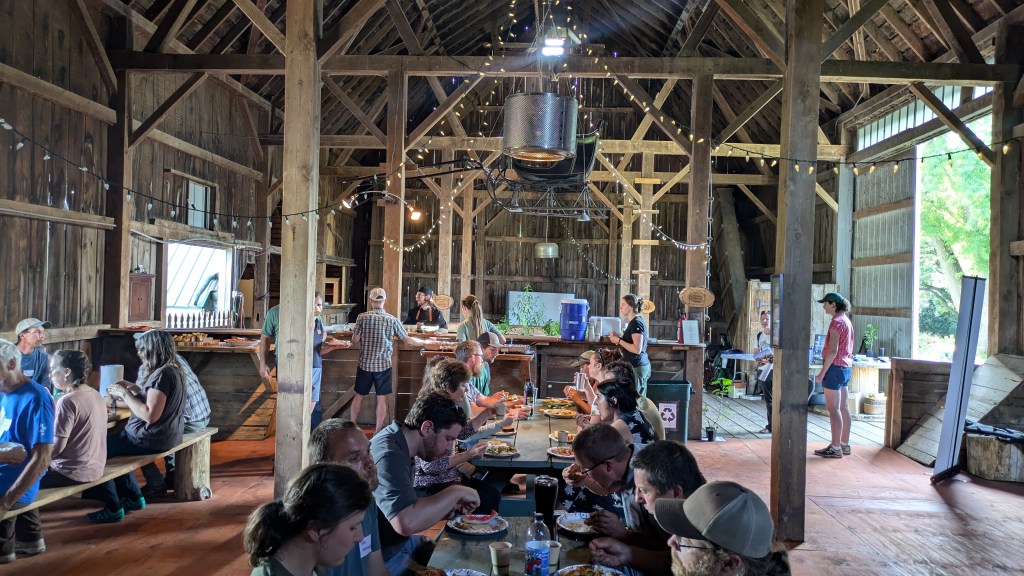
Other essential services, often overlooked and uncompensated, include ecosystem services (like water filtration), rural heritage conservation, natural and agricultural biodiversity, education programs, social connection, landscape beautification, and good ol’ recreation.
When we visit a farm, we engage with something beyond agriculture, something that brings value to our lives, something that ripples out to the whole community.
Things like:
- Nature connection: Spending time outdoors, tuning into the seasons, learning how plants and ecosystems work, reconnecting to spirituality of nature.
- Health and well-being: Moving our bodies, learning new skills, slowing our usual hectic pace, and gaining peace of mind knowing our food is nutritious and grown with care.
- Joy and belonging: Sharing a meal, attending a workshop, letting children explore, meeting neighbors, growing our sense of place and community identity.
- Traditions and heritage: Rediscovering childhood foods, learning forgotten pastimes, creating seasonal rituals, and connecting with our ancestral roots.
Farms can also provide less tangible, yet equally essential services, such as:
- empowering youth
- preventing disease
- creating safe places for families
- preserving farming as a profession
- providing food security and self-reliance for communities
- revitalizing rural areas
Thinking beyond per-acre profits
This is “civic agriculture”, a form of agriculture “between market and society” that both earns farmers a livelihood and builds community.
Farmers grow crops, relationships, trust, and networks. They are stewards of heritage, land, and knowledge.
These are all forms of community wealth, slices of the 8 forms of capital that represent real sustainability. With this bigger picture of a thriving society, we move beyond a sole focus on financial capital – cash and other monetary assets – what western culture long taught us was the main form of wealth.
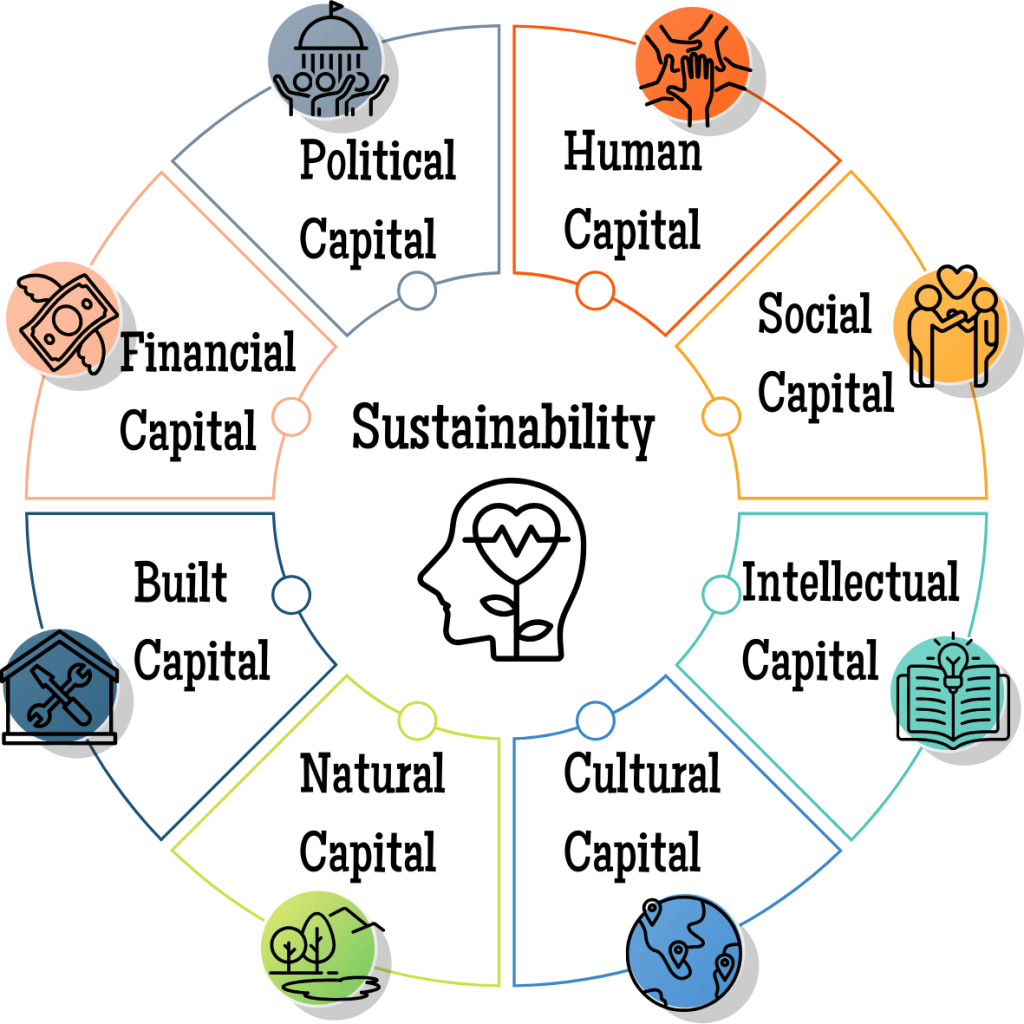
More and more, we acknowledge that true wealth, health, and happiness, not to mention resilience, are found when we cultivate all of these forms of capital.
We can then see the real value of a farm (or other resource), beyond what it earns in profits.
Growing a community farm
Good Trouble Grove (name inspired by U.S. civil rights icon and congressman John Lewis), is rooted in civic agriculture.
We explore how a small agroforestry farm can grow crops, community, ecosystem health, and provide a living for us farmers, through three interconnected offerings:
- Farm experiences: demonstrations, workshops, and seasonal gatherings
- Perennial plant nursery: Trees, plants, and seeds that help people grow connections to the land, including perennial foods and medicine
- On-farm store: Farm-grown products so you can bring the harvest home
In 2026, we were grateful to receive a SARE grant that allows us to dig deeper into how on-farm experiences can strengthen people’s relationships with agriculture, heritage, and community.
Our invitation to reconnect
Civics only works when folks get involved, which makes you an essential member of the team.
Join us as we grow this community farm, and the resilience, joy, health, and belonging that come with it.
To get started, you can follow this blog, join our email journal The Perennial, or visit the farm and say hello.
Welcome to the Grove ♥